


From Rainforest to Retail: ✨The Journey of a Fair Trade Tagua Nut
How a spiky rainforest pod becomes the beautiful "Vegetable Ivory" jewelry we craft at Sun and Wing.
Imagine a material so versatile it can mimic the smooth density of ivory, yet it is sustainably harvested from a living rainforest. That is the magic of the Tagua nut, often called "vegetable ivory."
At Sun and Wing, we love this material not just for its beauty, but for its story. Deep in the lush forests of Ecuador, these remarkable nuts are providing sustainable livelihoods and preserving the ecosystem—one bead at a time.
Here is the journey a Tagua nut takes to get from the forest floor to your jewelry box.
The Harvest: Nature's Gift
The journey begins with the Tagua palm (Phytelephas aequatorialis). Unlike traditional ivory, which requires harm to animals, or timber that requires cutting down trees, Tagua is a completely renewable resource.
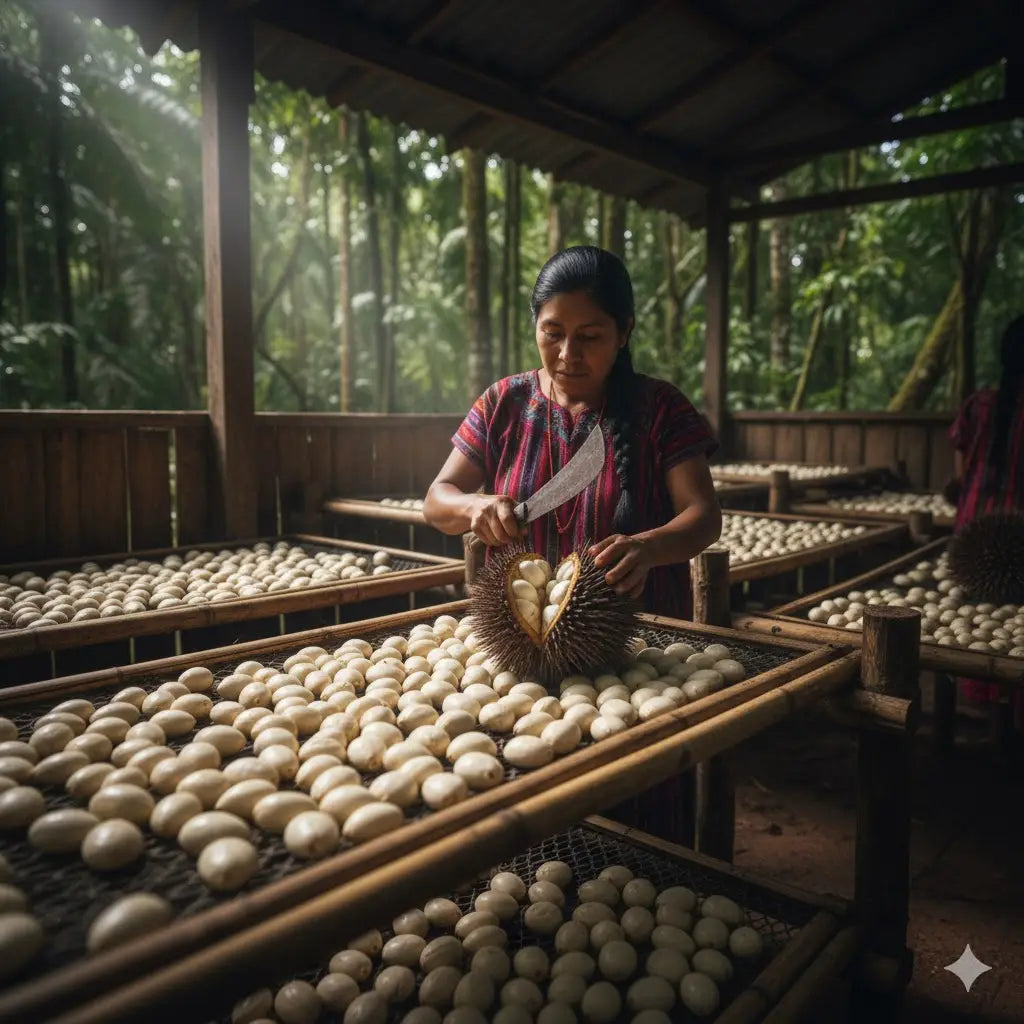
The palm produces large, dinosaur-like spiky pods called mococha. When these pods are ripe, they fall naturally to the forest floor. This is where skilled collectors—often from local indigenous communities—step in. They venture into the forest to gather the fallen pods, a method that ensures the palms are left unharmed to grow for years to come.
From Pod to Nut: The Preparation
Once collected, the thorny exterior is removed to reveal clusters of smaller nuts inside. At first, these nuts are soft and filled with a liquid similar to coconut water. To prepare them for crafting, they must be air-dried in the sun for weeks or even months.
During this time, the liquid solidifies and the nut becomes incredibly hard and dense. This natural hardening process is what gives Tagua its nickname, "vegetable ivory," and makes it durable enough to last a lifetime.
From Rainforest to Retail: The Journey of a Fair Trade Tagua Nut
We are proud to work with suppliers who adhere to fair trade principles. For decades, collectors were often underpaid for their hard work, but the shift toward fair trade has changed the landscape.
- Fair Wages: Collectors receive stable, equitable prices for their harvest.
- Safe Conditions: Workers process the nuts in safe environments.
- Eco-Preservation: Because the nuts are valuable, the local communities are motivated to protect the rainforest rather than cut it down for farming.
Adding Color to the Canvas
Once dried and polished (removing the brown skin), the ivory-white nut is ready for the artist. Tagua is porous, meaning it absorbs eco-friendly dyes beautifully.
From vibrant fuchsias to deep ocean blues, the dyeing process highlights the natural grain of the seed. Because no two nuts absorb dye exactly the same way, every single piece of handmade Tagua jewelry is truly one-of-a-kind.
From the Forest to You
When I sit down at my studio here in Illinois to design a new piece, I know I am holding a small part of the Ecuadorian rainforest.
By choosing Tagua, you aren't just wearing a colorful accessory; you are supporting a chain of sustainability that stretches thousands of miles. You are helping to keep trees standing and artisans working.
I invite you to browse our latest collection of handmade Tagua jewelry and find a piece that speaks to you.
Share